


Hope Beyond Dementia Diagnosis


Cynthia Huling Hummel was a Presbyterian pastor working on her doctorate when she began noticing problems, such as losing track of time and missing important meetings at church and dates with family and forgetting how to get to address she had visited several times before.
Then, after years of seeing doctors and medical specialists in search of a diagnosis, she finally had an answer: The 49-year-old had Alzheimer’s disease.
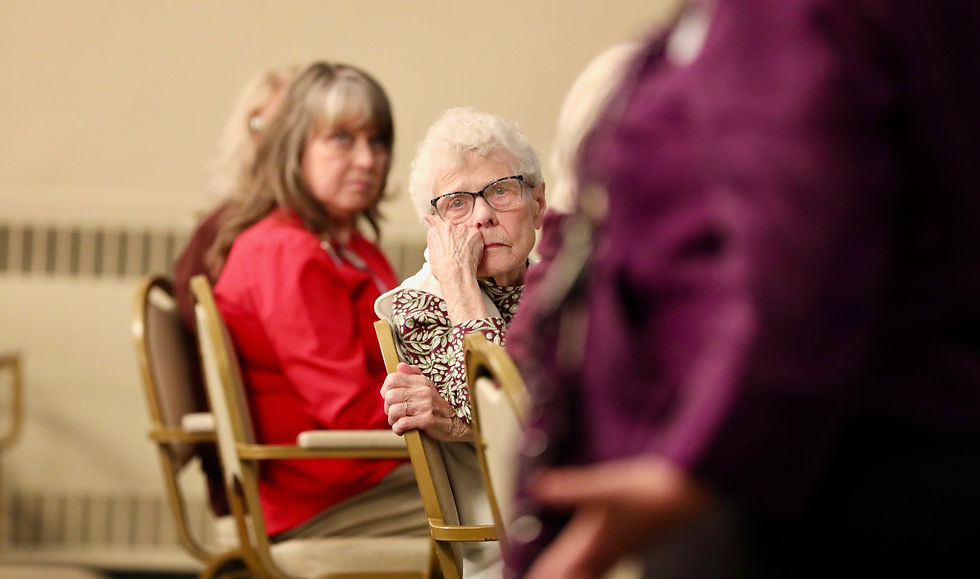
“All of us living with Alzheimer’s are different,” the 72-year-old told approximately 60 people attending “Living with Dementia: From Why Me to What’s Next?” part of a new MCH speaker series held for residents and staff as the facility prepares to expand its own dementia services with the opening of Friendship Place this summer. “If you treat somebody as incapable, then they begin to feel like that about life," Huling Hummel said. "Part of it is realizing that you’re not alone in this journey. There are other people who want to help.”
Today, Huling Hummel is among an estimated 7 million Americans living with Alzheimer’s, a progressive disease affecting memory and other cognitive abilities and the most common form of dementia.
Her diagnosis was not a complete shock. Her mother and uncle had already navigated the disease, but it pushed her into the next phase of life. She resigned from her position as a pastor, sought to learn more about Alzheimer’s, participated in studies and focused on experiencing life.
She joined the Peace Corps, took classes at Elmira College, began swimming and playing music, and started speaking publicly about her experiences with dementia. Huling Hummel has worked to increase understanding of the disease while underscoring the importance of research and remaining active for those living with Alzheimer’s.
“When we get a diagnosis, what are we going to do with that diagnosis?” she said. “I could sit on my couch, and I could cry … or I could start thinking, ‘What could I do next?’”
She later took an art class and created a mask representing one of her memories. That night, she made 35 more masks and eventually worked with her daughter, Emily, to publish the artwork in a book, “UnMasking Alzheimer’s: The Memories Behind the Masks.” A friend also helped display 10 of the masks at the National Gallery in Stockholm, Sweden.
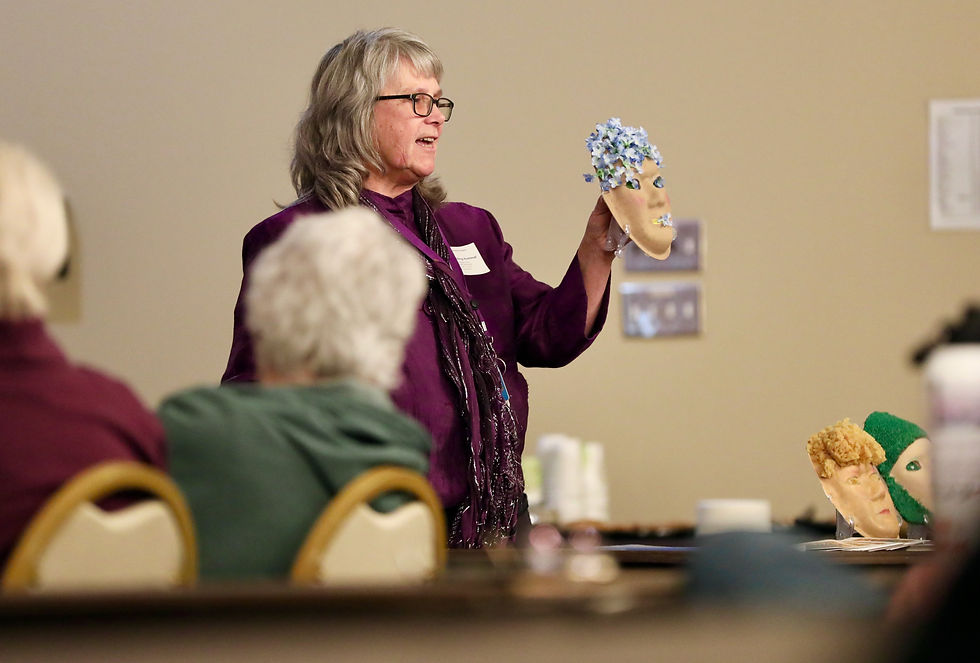
Huling Hummel was the first person living with dementia to serve on the National Advisory Council on Aging and has co-authored scientific journal articles multiple times. Her work has been recognized nationally, including receiving the Global Alzheimer’s Platform Foundation’s Citizen Scientist Catalyst Award. She has spoken at events for the World Health Organization, the United Nations, and continues to advocate for those living with Alzheimer’s.
She also said volunteering and remaining connected to a spiritual community are important ways for people with dementia to stay active.
“I think it’s important for people to not isolate themselves,” Huling Hummel said. “I just thought, ‘You know what? I’m going to do everything I want to do while I can still do it,’ and so I remember going up in a hot air balloon somewhere.”
MCH Speaker Series
The series features a range of guest speakers sharing expertise and experiences relevant to long-term care. All sessions are scheduled for 2 p.m. in the BRC and are for staff unless otherwise noted. For more information, please contract Liz Marsh.
All times and dates are subject to change. Asterisk denotes tentative dates.
May 20: Workplace Conflict: A Supervisor’s Guide with UR EAP. (Supervisors)
June 3: Understanding Your Credit Report & Score with CCC.
June 20: Nourish to Flourish: Healthy Eating & Nutrition with Foodlink.*
Nov. 4: Compassion Fatigue: When the Helping Profession Hurts with UR EAP.
Dec. 9: Stress Relief for Healthcare Workers/Staying Positive in Negative Situations


